Novel Biosecurity Solutions for Sustainable Agriculture and Forestry Subtitle: Turning Challenges into Value
Why biosecurity? What are current practices and risks?
Increasing biosecurity threats in forestry, agriculture, and health.
Spread of invasive pests and diseases.
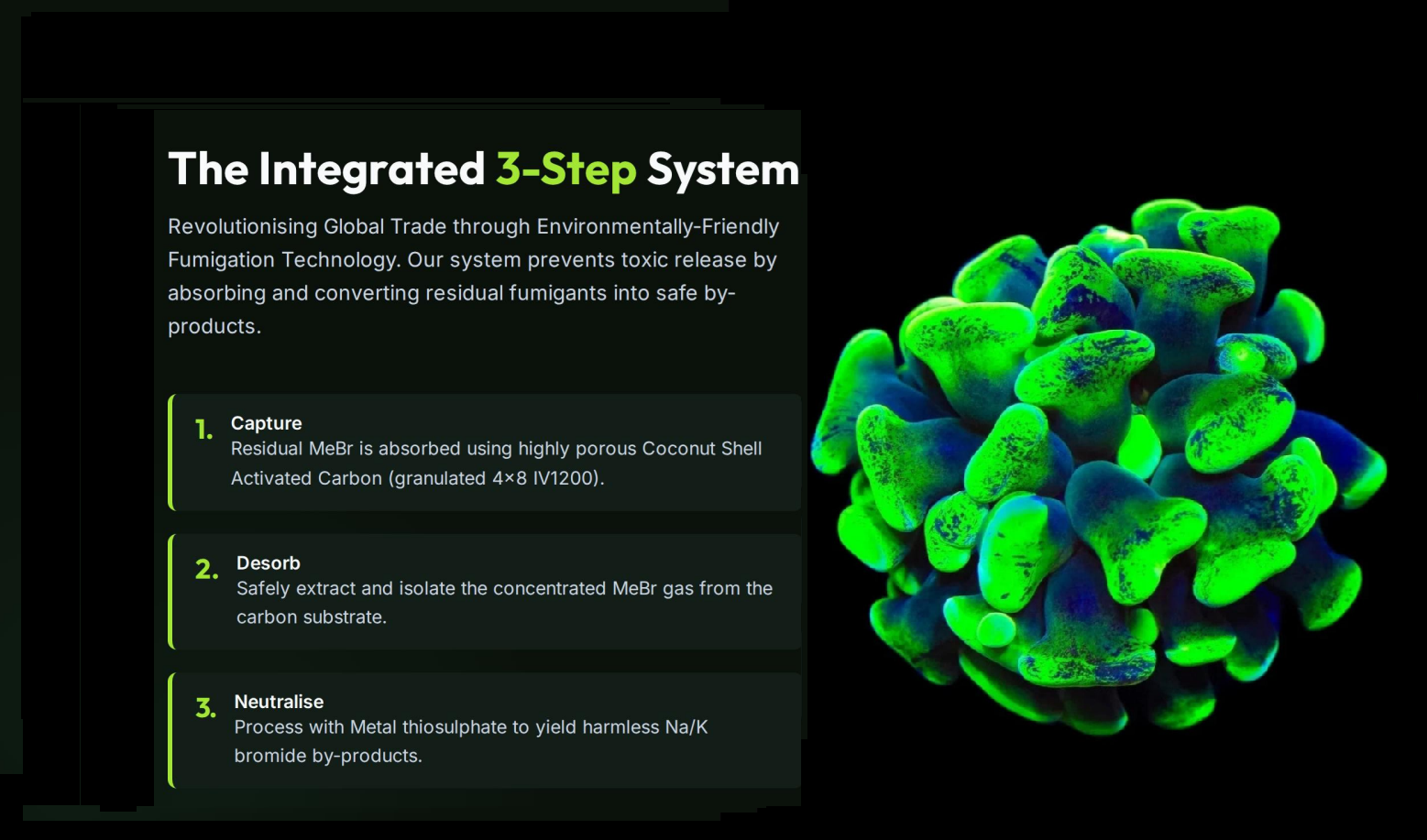
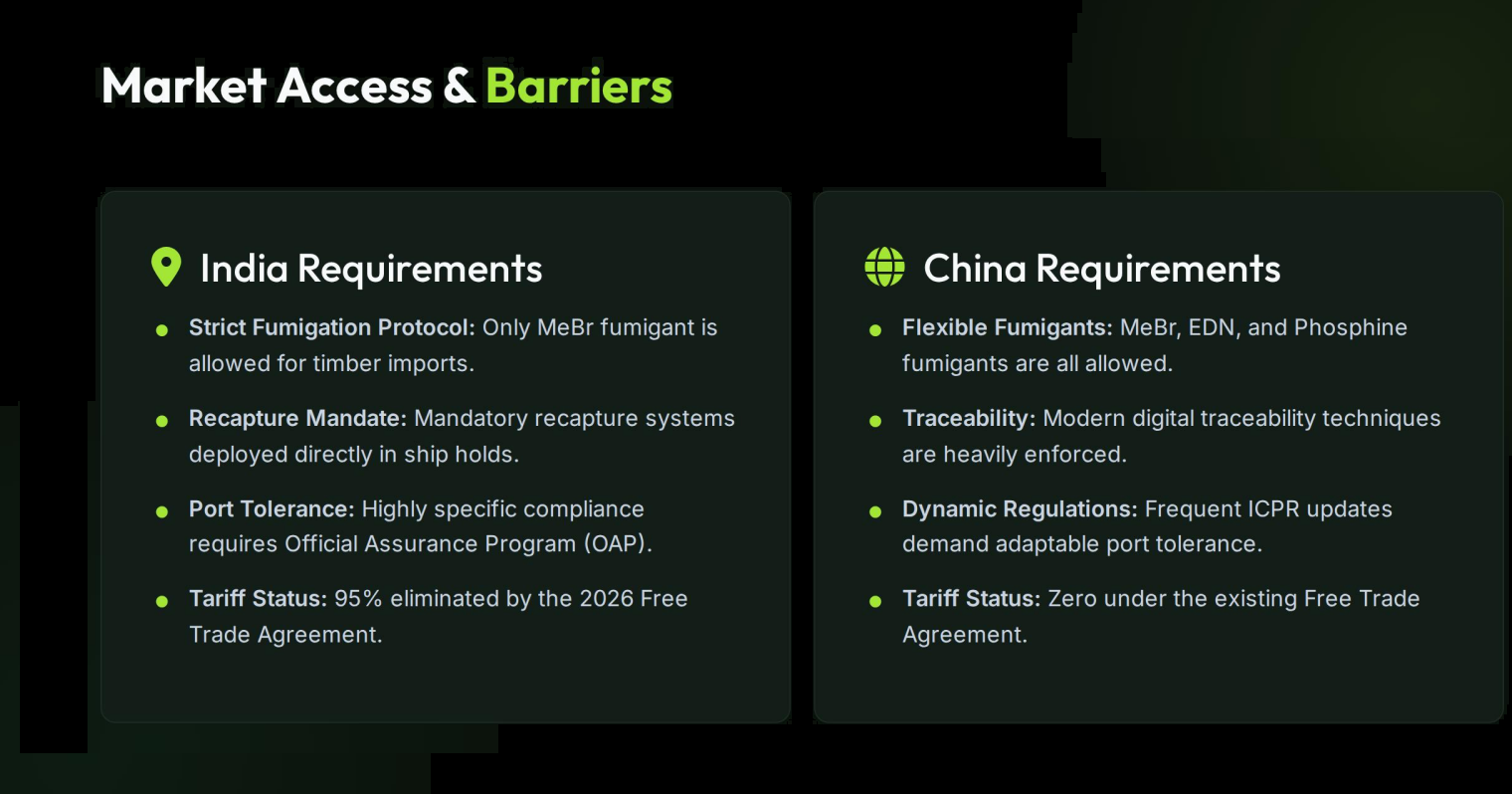
Current reliance on Methyl Bromide (MeBr) – a highly efficient fumigant that kills insect pests and diseases.
Mandatory MeBr requirements for importers in agriculture, ports, and logistics.
However, MeBr is toxic and ozone-depleting (regulated by the Montreal Protocol).
What options do we have? Challenges: Current alternatives (introducing other fumigants) have low efficacy, do not solve the biosecurity purpose, are not acceptable to major importers, are highly toxic to humans and the environment, and carry a high energy cost/carbon footprint. Current solutions are inefficient, costly, and pose higher risks.
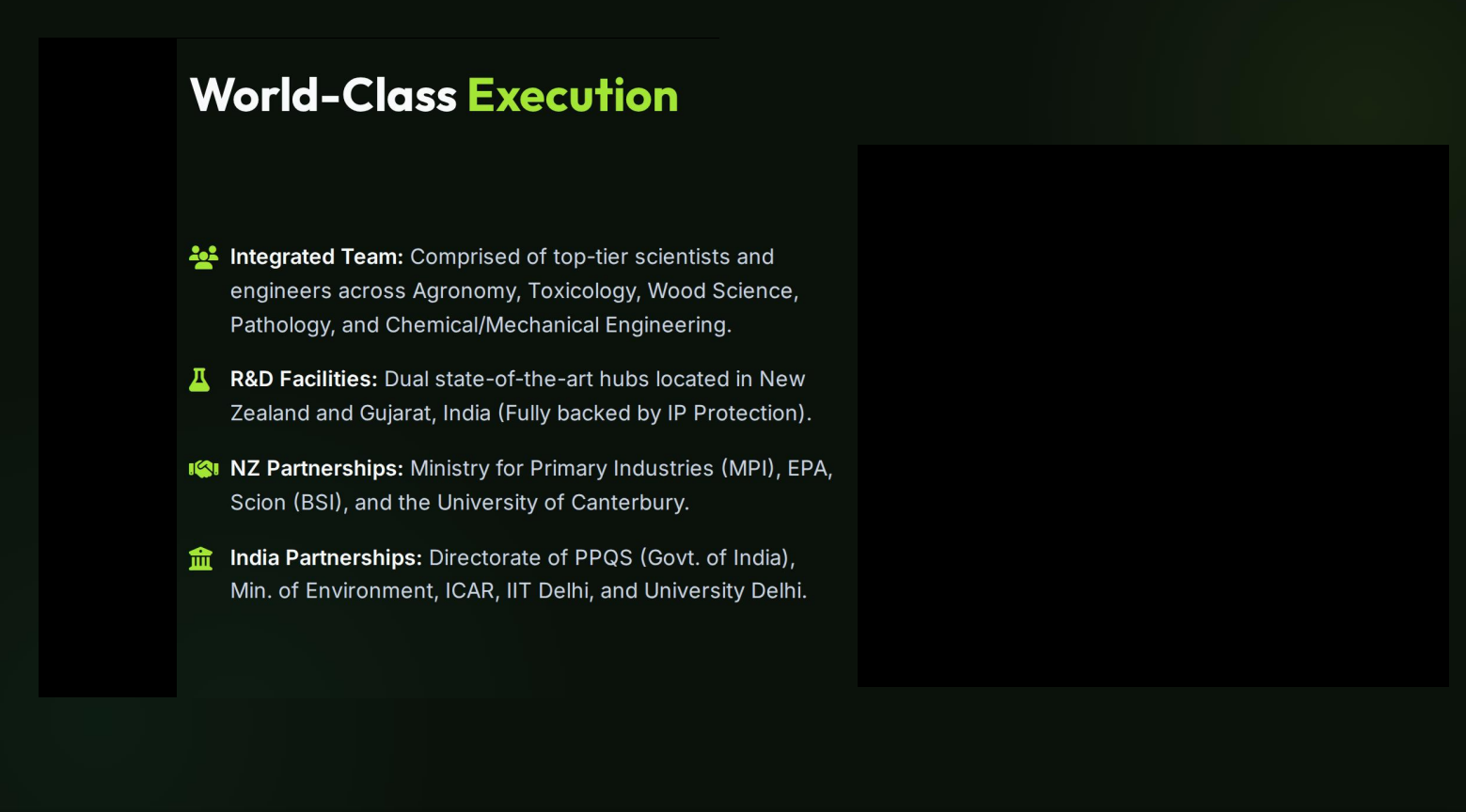
World-Class Execution – Integrated Team
Team Scientists & Engineers:
Jacob Mannothra (Agronomist/Forestry)
Dr. Rashmi Kant (Biosecurity/Entomologist/Toxicologist)
Dr. Jimmy (Wood Science)
Dr. Harshvardhan (Biosecurity/Pathology)
Yogesh Jain (Mech Engg.)
Binod Shukla (Chem Engg.)
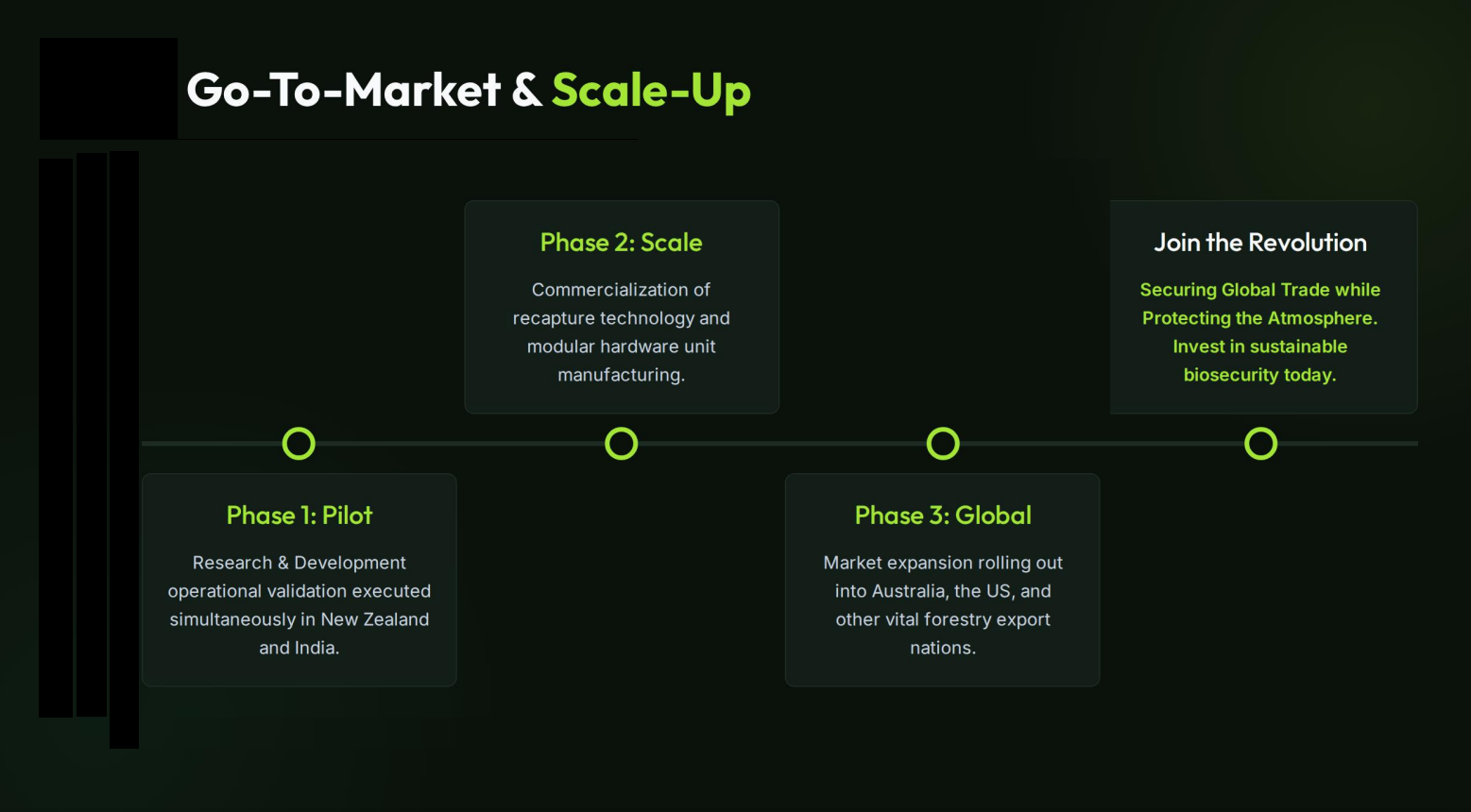
R&D Facilities: New Zealand & India port – Gujarat. (Backed by IP Protection).
Partnerships (New Zealand): MPI/ EPA - NZ, Scion - BSI - NZ, University of Canterbury. Partnerships (India): Directorate of PPQS - Govt of India, ICAR - NIPHM, Min of Environment, India, IIT Delhi and University Delhi.